
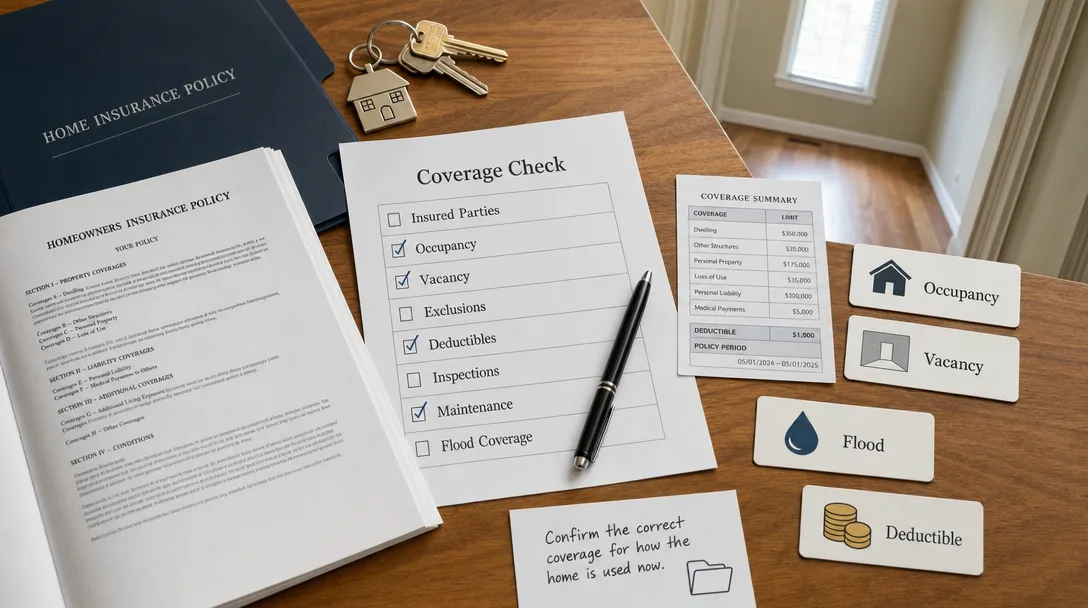
When a loved one dies, the house becomes the centerpiece of the estate's work: the value, the mortgage, the taxes, the question of whether to sell. The insurance policy on it rarely gets a second thought, and that is Mistake #6 in our seven-part series based on the free guide, 7 Probate Real Estate Mistakes to Avoid.
The gap matters more than most families realize. A home that sits uninsured, or underinsured, while an estate is open can cost the estate the house itself, and the mistake usually goes unnoticed until it is too late. The good news is that the fix starts with one document and one phone call.
Why the policy gets overlooked after a death
In the weeks after a death, the paperwork barely stops: death certificates, bank accounts, the will, the funeral. No one thinks to call the insurance company, and most policies just keep running, for a while. Then they lapse quietly. Mail addressed to the person who died stops being opened, so renewal notices go unread. Auto-pay premiums stop when a bank account is closed or frozen, often before anyone realizes that account was what kept the policy alive. Some families only learn the home is uninsured when a claim is filed, and by then the damage is already done.
What an uninsured inherited home risks
An uninsured or underinsured home leaves the estate exposed in two big ways. First, the property itself: a fire, a storm, or a water leak can destroy the home, and without coverage there is no money to rebuild it or pay the loss. Second, liability: if someone is hurt on the property, a contractor, a visitor, a neighbor lending a hand, the estate can be responsible for the cost. Every estate is different, and a Texas probate property often sits empty, a situation the original policy may never have covered.
Verify what is actually in force
The first move belongs to the executor , the person the court put in charge of the estate. Find the policy and read it: is it still in force, what does it cover, who is named on it, and when is the next premium due? Call the insurance company and confirm the policy is active, and ask for written confirmation. Pay the premium from estate funds on a schedule you control and confirm each payment clears, so a lapse cannot hide inside a closed account.
Does the policy still cover a vacant home?
Coverage is not a simple yes or no. A homeowner's policy covers the dwelling, other structures, personal property inside, and liability, but most policies assume the home is occupied. When a house sits vacant for a stretch of time, often 30 to 60 days, many policies limit or exclude coverage for the very losses a probate property is most at risk of, like water damage, theft, and vandalism. The usual fix is a vacancy endorsement, added to the existing policy so the coverage continues while the home is empty instead of being reduced or cut off.
Ask the insurance agent before assuming anything
The fastest way to close the gap is to talk to the estate's insurance agent, the person who knows the policy best. Ask directly: is the policy active, what does it cover on this house, does the coverage change if the home is vacant, what would a vacancy endorsement cost and cover, and should the policy name the estate or the executor? Get the answers in writing where you can. An insurance agent can resolve months of uncertainty in a single phone call, but only if someone makes it. That is the lesson: verify the policy, do not rely on assumptions.
Mistake #6 fits the series exactly. Mistake #1 built the team, Mistake #2 got the facts straight, Mistake #3 hired the work on paper, Mistake #4 coordinated the plan, and Mistake #5 protected the contents of the house. This one protects the house itself, because nothing else an estate does can move forward if the property is not covered while the probate estate is open.
Guy Courtney Steib is a licensed Texas real estate professional, not an attorney. This article is educational, not legal advice. Insurance policies and coverage vary by carrier and policy, so verify the details of your situation with a licensed attorney and the estate's insurance agent.