
Choosing the people who touch the house, its contents, and its repairs is the part of a probate estate that families rarely plan for. Once the court questions are settled, most estates need three providers at once: an estate sale company, a cleanout crew, and a repair contractor. Hiring the first person who answers the phone is Mistake #3 in our seven-part series based on the free guide, 7 Probate Real Estate Mistakes to Avoid.
Here is what a hurry costs. Estate sale companies and cleanout crews often price the job on percentages or flat fees with little written detail, so anything not agreed on in writing gets decided in the moment, on the estate's dime. Family heirlooms are mistaken for clutter, and jewelry, coins, silver, and cash can leave in a pocket or a box headed for the dump. A few careful days of comparing written proposals protect the estate better than any race to the first phone call.
Get written proposals from at least a few providers
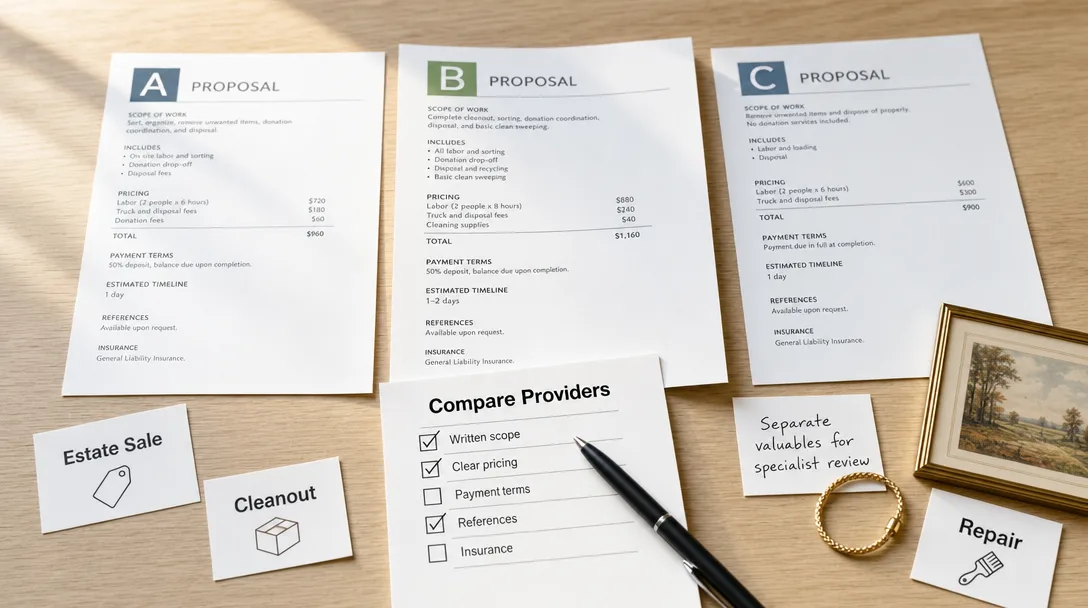
Ask at least three providers in each category for a written proposal, and ask them to describe the same scope the same way so you can compare like for like. Read every proposal line by line: the exact work included, how the price is built, when payment is due, how long the job takes, whether the company carries insurance and how much, and references you can actually call. A provider who cannot put the details in writing is telling you how the job will go.
What every written proposal should spell out
- The exact scope of work, described the same way by every provider you compare
- Line-item pricing: flat fee, hourly, or percentage, and who pays disposal and dump fees
- Payment terms: what is due upfront, when the balance is due, and in what form
- Proof of insurance and licensing, and what the policy covers
- A start and completion timeline, and who to call when something changes
- What happens to unsold items, donated items, and anything the crew cannot take
Separate the valuables before anything moves
Before a single box is packed, walk the house with one job: separate what is valuable from what is furniture. Jewelry, coins, silver, watches, firearms, cash, and important papers should be set aside and secured, along with anything of clear sentimental value. Have a specialist review anything that might be valuable, not just the company you are comparing: a licensed appraiser, an auction house, or a dealer who knows that category. Photograph each item and keep a simple list, so there is a written record of what was in the house before the crew arrived.
Choose a documented plan over a rushed cleanout
Nothing here takes a big budget, only a plan. Written proposals, a valuables inventory, and a timeline agreed in advance turn a scramble into a sequence, and the same discipline protects the house itself. Families who slow down make better calls about whether to empty the house right away and whether repairs are worth doing before a sale .
It is the same habit behind the mistakes in this series that came before: slow down, write it down, and choose on paper. Ask the questions in Mistake #1 about building the team early, and in Mistake #2 about understanding how probate works, and this third piece fits right between them: the team is in place, the process is clear, and now the work gets hired the way it deserves to be.
Disclaimer: this website provides general information only and is NOT legal advice. For advice about your specific situation, always consult a licensed attorney. Probate is a legal process handled by the county courts in Texas, and every estate is different.