
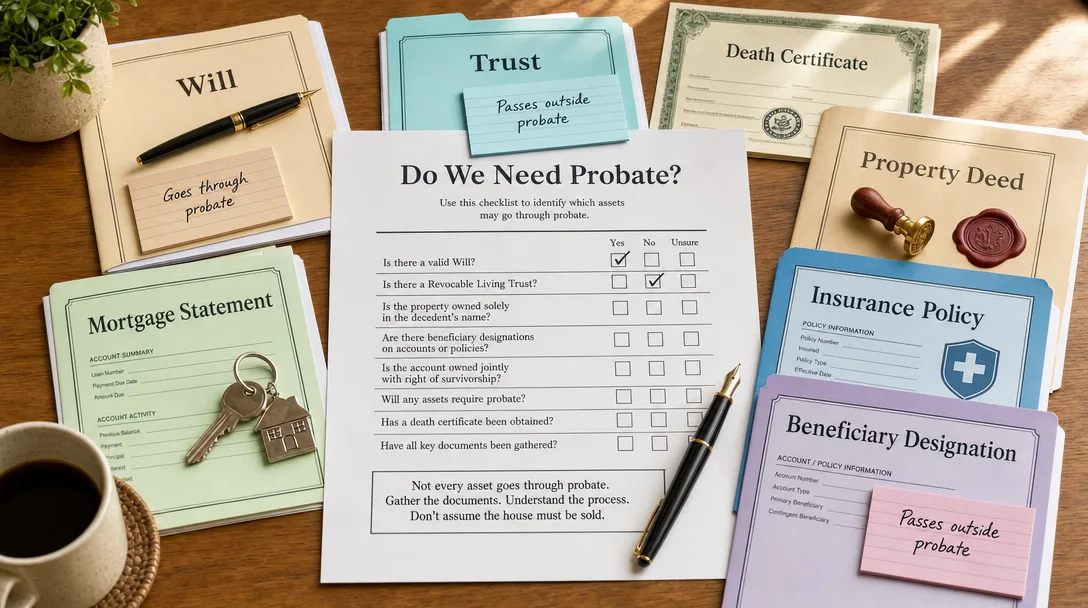
Here is the plain-English version of Mistake #2: too many families assume that because a loved one has died, the house must go through probate , and because it goes through probate, it must be sold. Neither half of that assumption is true. Probate is the court process that decides who has authority over an estate and how its assets pass to the people who inherit them. Whether a given asset goes through it, and who holds authority over it, depends on how the asset was owned and titled. Gather those facts first, and the process starts to feel a lot less frightening.
Not every asset goes through probate, and the difference is usually one piece of paper. A will must be proven in court before an executor can act on it. A trust, in many cases, lets a named trustee act without a court appointment. A deed with rights of survivorship passes the house directly to the surviving owner. And accounts with a named beneficiary, such as life insurance and retirement accounts, pass outside probate entirely. Each document changes the next step, which is why the first job is to see which ones exist.
Gather the documents before you schedule anything
Before anyone lists a house, signs a contract, or even calls an estate attorney with questions, gather what exists. The original will, if there is one. Any trust documents. Death certificates, and order several certified copies early. Property records, deeds, and title information. Mortgage statements, tax notices, and insurance policies. Statements for bank, investment, and retirement accounts. The goal is not to become an archivist; it is to see the estate whole, because each document tells you which path an asset takes.
Then make a list: assets, debts, and the people who matter
With the documents in hand, write down three lists: known assets, known debts, and the people who may have an interest in the estate. Then flag anything that is missing or unclear for your attorney: a deed you cannot find, an account you did not know about, a loan nobody remembers. Counsel working from a complete picture gives you a far more accurate answer than counsel working from guesswork.
The documents to gather first
- The original will, plus any trust documents and amendments
- Certified death certificates; order several copies early
- Property records and deeds for every piece of real estate
- Mortgage statements, property tax notices, and insurance policies
- Statements for bank, investment, and retirement accounts
- A list of known debts and of the people named in the documents
Ask the two questions that decide everything
When the documents are gathered, the whole estate comes down to two questions. What procedure fits this estate, and who has authority over the property? The first determines whether you are looking at formal probate, an independent administration, or no court process at all. The second determines who signs the listing agreement and, eventually, the deed. Until both questions have answers, no one should commit to a sale, and the house does not have to be sold just because its owner has died.
Families often confuse the process with the sale. The process is paperwork and authority; the sale is a choice the right people make later, with market facts in front of them. That is why we suggest calling a certified real estate specialist early , and why knowing what an inherited house is really worth matters before any decision to list. Both go smoother when the documents are gathered first.
Guy Courtney is a licensed Texas real estate professional, not an attorney. Nothing on this site is legal advice. For advice about your specific situation, always consult a licensed attorney.