
When a family loses someone, the house gets all the attention: the roof, the value, the mortgage, the question of whether to sell. The things inside it get less attention, but in Texas the contents of the home are every bit as much a part of the probate estate as the house itself. Leaving a home unsecured and its belongings undocumented is Mistake #5 in our seven-part series based on the free guide, 7 Probate Real Estate Mistakes to Avoid.
An empty house presents the estate, and the family, with a test most people never plan for. The rooms still hold the furniture, the china, the tools, the jewelry, the photo albums, and the small everyday things the person who lived there chose. Every one of those things belongs to the estate, and an estate cannot make a thoughtful decision about something it cannot account for.
What an empty house invites
A house that sits empty and unlocked is not empty for long. Windows get forced, locks get replaced, and belongings can walk out in a single night, often before anyone in the family knows. The quieter damage is slower: heat, cold, humidity, a slow roof leak, pests, an appliance left running. If the utilities are shut off too soon, a frozen pipe can do more damage than a break-in. Securing the doors and windows, and keeping the house safe and insured while the estate is open, protects far more than the walls.
Inventory early, room by room
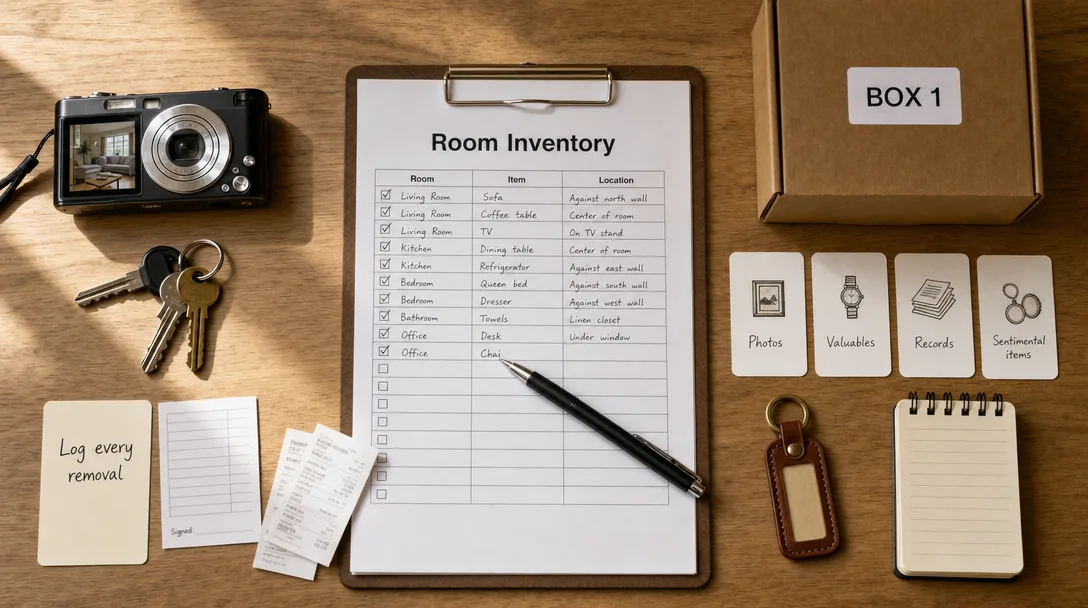
The fix starts with an itemized inventory , taken early, before anything is packed, donated, or sold. Walk the house room by room, write down what is there, and photograph what matters: furniture worth something, artwork, jewelry, tools, collections, and anything with a story. It does not need to be a professional appraisal. A notebook, a phone camera, and an hour per room is enough to begin. Keep the list and the photos together, in one place the executor controls, and update them as things change.
What a good inventory protects
A written record protects the family from the hardest part of an estate: the arguments. When heirs can see what was in the house and where it went, a fair split is easier to explain and an unfair one is harder to make stick. It also protects money. If anything is lost, stolen, or damaged, an insurance claim is only as strong as the documentation behind it, and a list with photos beats a memory. Estate sale companies and appraisers do their best work from a list, pricing what they can see was there instead of guessing what mattered.
Inventorying the house fits this series exactly. Mistake #1 built the team, Mistake #2 got the facts straight, Mistake #3 hired the work on paper, and Mistake #4 coordinated the plan. Mistake #5 protects what every one of those decisions is about: the property, and the people it belongs to.
Guy Courtney is a licensed Texas real estate professional, not an attorney. Nothing on this site is legal advice. For advice about your specific situation, always consult a licensed attorney.